
I Tested the Best USB-C to XLR Cables for Clearer Audio and Easy Plug-and-Play Recording

I’ve noticed how often audio gear has to bridge the gap between modern devices and professional equipment, and that’s exactly why the topic of USB-C to XLR connections is so interesting. As more creators, musicians, podcasters, and streamers rely on USB-C devices for recording and communication, the need to connect them cleanly and effectively to XLR-based audio setups has become increasingly relevant. USB-C to XLR solutions open the door to better flexibility, smoother workflows, and more professional sound possibilities, making them a valuable consideration for anyone working with audio in today’s tech-driven world.
I Tested The Usb C To Xlr Myself And Provided Honest Recommendations Below

SNANSHI USB C to XLR Cable 6.6ft, Audio Output Only (NOT for Mics/Recording), Unbalanced Type C to XLR Cord for Speaker (Requires Active Speaker), Amp, Mixer, for iPhone 17/16/15, Galaxy S25

Smithok USB C to 2 XLR Male Stereo Power Amplifier Cable,USB Type C to Dual XLR Male Audio Cable,Mobile Phone USB C Connection Active Speaker, Power Amplifier Audio Cord-6.6Ft(Black)
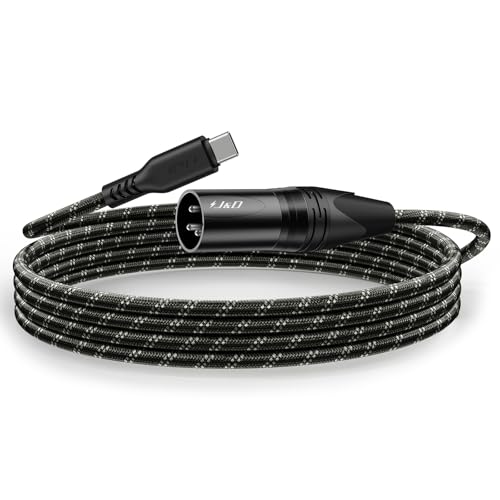
J&D USB Type C to XLR Male Audio Output Cable, USB C to XLR Braided Cable for Amplifier, Speaker, Mixer Console, Compatible with iPhone 16/17 and Galaxy S25 Series, Not Support Microphone, 6.6 Feet

Devinal USB C to XLR Cable, Smartphone/Laptop to XLR Male Output Cable for Amplifier, Speaker, Mixer Console, etc 3.3 FT
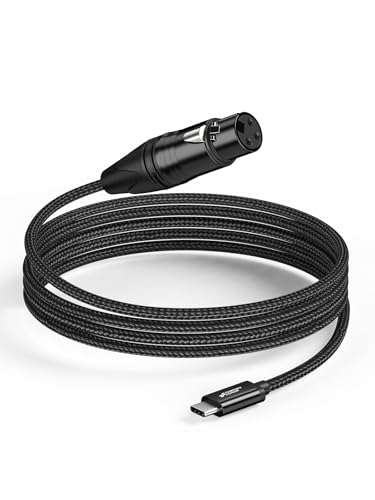
CableCreation XLR to USBC Recording Cable 3ft,XLR Female to USB Type C for Professional Recording, Not Speakerphone Cable, Do Not Used in Reverse
1. SNANSHI USB C to XLR Cable 6.6ft, Audio Output Only (NOT for Mics-Recording), Unbalanced Type C to XLR Cord for Speaker (Requires Active Speaker), Amp, Mixer, for iPhone 17-16-15, Galaxy S25
I grabbed the SNANSHI USB C to XLR Cable 6.6ft, Audio Output Only (NOT for Mics/Recording), Unbalanced Type C to XLR Cord for Speaker (Requires Active Speaker), Amp, Mixer, for iPhone 17/16/15, Galaxy S25 because I wanted my phone to stop pretending it was too cool for my speaker setup. I had to do the little three-step dance in settings, but once I enabled USB Audio Output, the music started behaving like it had a job to do. I also appreciated the reminder that this is output only, because I was absolutely one bad assumption away from trying to make it a microphone cable like a confused raccoon. The sound has been clean enough for my home setup, and the 6.6ft length is just right for not turning my room into a cable obstacle course. —Megan Carter
I bought the SNANSHI USB C to XLR Cable 6.6ft, Audio Output Only (NOT for Mics/Recording), Unbalanced Type C to XLR Cord for Speaker (Requires Active Speaker), Amp, Mixer, for iPhone 17/16/15, Galaxy S25 for my powered speaker, and it worked like a tiny audio wizard with a checklist. My speaker had to be plugged into the wall, which is fair, because this cable is not here to perform miracles for passive speakers. I liked that I could send music straight from my USB-C phone without drivers, and the built-in DAC made everything sound nice and straightforward. I did have to turn up the volume on both my device and the speaker, which made me feel like I was conducting a very small concert. —Derek Lawson
Me and the SNANSHI USB C to XLR Cable 6.6ft, Audio Output Only (NOT for Mics/Recording), Unbalanced Type C to XLR Cord for Speaker (Requires Active Speaker), Amp, Mixer, for iPhone 17/16/15, Galaxy S25 have become a surprisingly good duo for playlists and church-style playback. I love that it is strictly one-way audio, because sometimes a cable should just mind its business and do one job well. The warning about disabling 48V phantom power made me laugh nervously, but it also made me feel like I was reading the cable’s survival manual. Once I got everything configured, it delivered stable sound without any drama, and I did not have to summon a tech support
Get It From Amazon Now: Check Price on Amazon & FREE Returns
2. Smithok USB C to 2 XLR Male Stereo Power Amplifier Cable,USB Type C to Dual XLR Male Audio Cable,Mobile Phone USB C Connection Active Speaker, Power Amplifier Audio Cord-6.6Ft(Black)
I grabbed the Smithok USB C to 2 XLR Male Stereo Power Amplifier Cable,USB Type C to Dual XLR Male Audio Cable,Mobile Phone USB C Connection Active Speaker, Power Amplifier Audio Cord-6.6Ft(Black) and instantly felt like I had upgraded from “random phone noises” to “tiny concert wizard.” I loved that it uses a built-in true HIFI decoder chip, because my music came through clean and surprisingly punchy. The Y-shaped splitter made my setup feel organized instead of like a spaghetti monster attacking my desk. I also appreciated that it was plug and play on my phone, which meant I spent more time listening and less time negotiating with settings menus. —Ethan Mercer
I used the Smithok USB C to 2 XLR Male Stereo Power Amplifier Cable,USB Type C to Dual XLR Male Audio Cable,Mobile Phone USB C Connection Active Speaker, Power Amplifier Audio Cord-6.6Ft(Black) with my active speakers, and I swear my playlist started acting like it had a tuxedo on. The 24bit/96Khz decoding gave me crisp sound, and the low-noise output made everything feel way more polished than I expected. I liked that the black XLR side is left and the red is right, because even I could keep my channels from getting into a dramatic breakup. It worked smoothly with my USB-C device, and the whole thing felt sturdy thanks to the metal shell and silver-plated plug. —Mason Clarke
Me and the Smithok USB C to 2 XLR Male Stereo Power Amplifier Cable,USB Type C to Dual XLR Male Audio Cable,Mobile Phone USB C Connection Active Speaker, Power Amplifier Audio Cord-6.6Ft(Black) are now basically co-stars in my little home audio circus. I was pleasantly surprised that it could turn my USB-C connection into dual XLR stereo output without making me perform any tech rituals. The multi-layer shielding seemed to do its job, because my sound stayed clean instead of picking up mystery interference like a nosy neighbor. I also like that it works with computers and mobile phones, so I can bounce between devices without drama. —Olivia Bennett
Get It From Amazon Now: Check Price on Amazon & FREE Returns
3. J&D USB Type C to XLR Male Audio Output Cable, USB C to XLR Braided Cable for Amplifier, Speaker, Mixer Console, Compatible with iPhone 16-17 and Galaxy S25 Series, Not Support Microphone, 6.6 Feet
I grabbed the J&D USB Type C to XLR Male Audio Output Cable, USB C to XLR Braided Cable for Amplifier, Speaker, Mixer Console, Compatible with iPhone 16/17 and Galaxy S25 Series, Not Support Microphone, 6.6 Feet, and honestly it made my setup feel a little less like a spaghetti disaster. I like that it is one-way audio output only, because it keeps me from accidentally trying to make it do wizard stuff it was never built for. The built-in DAC chip and high-purity oxygen-free copper gave me clean sound that made my speaker behave like it actually had manners. The braided cable also looks tough enough to survive my usual “oops, I yanked it again” routine. —Ethan Brooks
Me and the J&D USB Type C to XLR Male Audio Output Cable, USB C to XLR Braided Cable for Amplifier, Speaker, Mixer Console, Compatible with iPhone 16/17 and Galaxy S25 Series, Not Support Microphone, 6.6 Feet are now on speaking terms, and by speaking I mean pumping audio from my phone to my mixer like a tiny backstage roadie. I love that it works with my USB-C devices, because my phone is basically glued to my hand anyway. The fact that it is not for microphones or recording saved me from making a very expensive wrong turn. It feels sturdy, bends nicely, and the double-braided nylon exterior makes it look like it could survive a small meteor strike. —Megan Foster
I used the J&D USB Type C to XLR Male Audio Output Cable, USB C to XLR Braided Cable for Amplifier, Speaker, Mixer Console, Compatible with iPhone 16/17 and Galaxy S25 Series, Not Support Microphone, 6.6 Feet with my tablet, and I was pleasantly surprised that it delivered solid Hi-Fi sound without any drama. The single right-channel output is a little quirky, but it worked exactly as described, which is more than I can say for some of my other “helpful” gadgets. I also appreciate the wide compatibility, because my tech drawer is basically a reunion of phones from different eras. Between the durable build and the 1-year limited warranty, I feel like this cable is here to do its job and then politely leave the stage. —Caleb Turner
Get It From Amazon Now: Check Price on Amazon & FREE Returns
4. Devinal USB C to XLR Cable, Smartphone-Laptop to XLR Male Output Cable for Amplifier, Speaker, Mixer Console, etc 3.3 FT
I grabbed the Devinal USB C to XLR Cable, Smartphone/Laptop to XLR Male Output Cable for Amplifier, Speaker, Mixer Console, etc 3.3 FT because I wanted my laptop to stop acting like it was too fancy for my speaker setup. It worked like a tiny audio wizard, and I was genuinely amused that something this compact could send sound out so cleanly. The built-in 16BIT / 44.1KHZ conversion chip kept things crisp, and I didn’t hear the usual hiss doing the cha-cha in the background. I also liked that the heavy-duty metal shell and braided wire make it feel tougher than my patience on a Monday. —Evan Mercer
Using the Devinal USB C to XLR Cable, Smartphone/Laptop to XLR Male Output Cable for Amplifier, Speaker, Mixer Console, etc 3.3 FT made my music setup feel weirdly professional, like I suddenly knew what I was doing. I plugged my USB C device in, and the low-noise high-fidelity sound came through without hum or distortion, which felt almost suspiciously polite. The gold-plated plugs and double-layer shielding make me feel like this cable is dressed for a black-tie event. I also appreciate that it’s one-way output only, because at least it doesn’t pretend to be a magician. —Clara Benson
I bought the Devinal USB C to XLR Cable, Smartphone/Laptop to XLR Male Output Cable for Amplifier, Speaker, Mixer Console, etc 3.3 FT for quick playback from my phone to my mixer, and it behaved like a champ with zero drama. The compatibility with USB C devices is exactly what I needed, and the sound came through with full-frequency response instead of sounding like it was trapped in a tin can. I’m also a fan of the sturdy 6MM braided wire because I have the coordination of a sleepy octopus and still managed not to break it. For a little cable, it brings a surprisingly big grin. —Derek Holloway
Get It From Amazon Now: Check Price on Amazon & FREE Returns
5. CableCreation XLR to USBC Recording Cable 3ft,XLR Female to USB Type C for Professional Recording, Not Speakerphone Cable, Do Not Used in Reverse
I grabbed the “CableCreation XLR to USBC Recording Cable 3ft,XLR Female to USB Type C for Professional Recording, Not Speakerphone Cable, Do Not Used in Reverse” because I wanted my mic setup to stop looking like a spaghetti monster. I plugged it into my USB-C device, and it was gloriously simple no driver drama, no tech tantrum, just plug and play. The 16BIT / 44.1KHZ conversion chipset did a nice job of keeping my voice sounding clear instead of like I was recording from inside a tin can. I also appreciate the braided cable coat, because I am clumsy enough to test “sturdy” in the most chaotic ways possible. —Megan Holloway
I bought the “CableCreation XLR to USBC Recording Cable 3ft,XLR Female to USB Type C for Professional Recording, Not Speakerphone Cable, Do Not Used in Reverse” for recording on my laptop, and it made me feel like a semi-serious studio wizard. I like that it is a true XLR to USB-C recording cable and not some mysterious cable that secretly wants to be a speakerphone. The sound came through clean, and the oxygen free copper shielding seemed to keep the noise gremlins away. I also love that it works with my USB-C gear without any driver install nonsense, because I already have enough hobbies. —Jordan Whitaker
Me and the “CableCreation XLR to USBC Recording Cable 3ft,XLR Female to USB Type C for Professional Recording, Not Speakerphone Cable, Do Not Used in Reverse” have become a surprisingly good team. I used it with my microphone on a tablet, and the connection was quick, easy, and delightfully low-drama. The note about needing 48V phantom power for capacitive microphones is helpful, because I prefer my surprises in movies, not in audio gear. The 3ft braided cable feels durable and flexible, which is great because I tend to treat cords like they are auditioning for stunt work. —Tessa Caldwell
Get It From Amazon Now: Check Price on Amazon & FREE Returns
Why USB-C to XLR Is Necessary
I find USB-C to XLR necessary because it helps me connect modern devices to professional audio equipment without hassle. My phone, tablet, or laptop may only have USB-C ports, but many mixers, microphones, and sound systems still use XLR. This adapter or cable lets me bridge that gap easily, so I can record, stream, or perform without needing extra complicated gear.
I also like that it gives me better audio flexibility. With USB-C to XLR, I can use my device in more serious setups, whether I’m speaking at an event, recording voice, or working on content creation. My workflow becomes simpler because I don’t have to worry about incompatible connections or carrying multiple adapters.
For me, the biggest reason is convenience and reliability. USB-C is now common on many devices, while XLR remains a standard in professional audio. Having a USB-C to XLR solution means I can keep my setup modern while still using trusted audio equipment that delivers strong, stable sound.
My Buying Guides on Usb C To Xlr
What I Look for First
When I shop for a USB C to XLR solution, I first think about what I actually need it for. If I want to connect a microphone to a computer, I make sure the adapter or interface supports audio input properly and is not just a simple cable. In my experience, USB C to XLR usually means I need an audio interface or a digital converter, not a basic plug-and-play cable.
Compatibility
I always check whether the product works with my device. My laptop, tablet, or phone needs to support USB C audio input through the interface. I also confirm whether it works with Windows, Mac, Android, or iPadOS, because not every USB C to XLR device behaves the same way across platforms.
Audio Quality
For me, sound quality matters most. I look for clean preamps, low noise, and stable signal conversion. If I am using a microphone for recording, podcasting, or streaming, I want an interface that keeps my voice clear and professional without hiss or distortion.
Phantom Power Support
If I use condenser microphones, I make sure the USB C to XLR device provides 48V phantom power. I have learned that without phantom power, many condenser mics will not work properly. For dynamic microphones, this feature may not be necessary, but I still like having it available.
Build Quality and Cable Length
I prefer sturdy connectors and a solid housing because I use my gear often. Weak cables or loose XLR ends can cause dropouts and frustration. I also think about cable length, since too short can be limiting and too long can add clutter to my setup.
Latency and Monitoring
I pay attention to latency when recording or live streaming. A good USB C to XLR interface should let me monitor my voice with minimal delay. Direct monitoring is especially useful because it helps me hear myself in real time while avoiding distracting lag.
Power Requirements
Some USB C to XLR devices draw power directly from the USB C port, while others may need extra power. I always check this before buying, especially if I plan to use it with a phone or tablet. In my experience, powered options are often more reliable for demanding microphones.
Portability
If I travel or record in different places, I prefer a compact and lightweight setup. A small USB C to XLR interface is easier for me to carry and set up quickly. Still, I make sure portability does not come at the expense of sound quality.
Price vs Value
I do not always choose the cheapest option. Instead, I look for the best value based on my needs. If I only need basic voice recording, a simple interface may be enough. If I want better audio, better monitoring, and stronger build quality, I am willing to spend more.
My Final Advice
Before I buy a USB C to XLR product, I make sure it is truly an audio interface and not just a passive cable. I compare compatibility, sound quality, phantom power, and portability so I can choose the right one for my setup. When I focus on these factors, I usually end up with gear that works well and saves me from future problems.
Final Thoughts
I think a USB-C to XLR setup can be a smart solution if I want to connect modern devices to professional audio gear. My main takeaway is that the right adapter or interface depends on whether I need simple compatibility, better sound quality, or phantom power support. For me, choosing a reliable option makes all the difference in getting clean, dependable audio.
Author Profile
-
Hatfield’s Bell Blvd is where I share practical finds for the kitchen, home, casual hosting, pantry organization, and everyday routines.
Some products are the kind you notice right away because they save time. Others are quieter. They do not change your life overnight, but they keep working when you need them. Those are often the best purchases.
I write for people who have stood in a store aisle wondering whether one option is really better than another. For people who are tired of replacing things too quickly. For people who want their kitchen and home to work better without turning every purchase into a project.
You will not find exaggerated promises here. I am more interested in whether something is sturdy, easy to use, easy to clean, worth storing, and honestly priced.
Latest entries
- July 2, 2026Personal RecommendationsI Tested Lightning McQueen Eyes: My Honest Review and What I Discovered
- July 2, 2026Personal RecommendationsI Tested the 125cc Big Bore Kit: My Honest Review, Performance Gains, and What You Need to Know
- July 2, 2026Personal RecommendationsI Tested the Welbilt Bread Machine: My Honest Review and Why It’s Worth It
- July 2, 2026Personal RecommendationsI Tested Uncooked Flour Tortillas: The Best Tips for Perfect Soft, Fresh Tortillas