
I Tested TC Electronic RPT-1 vs ND-1: Which Guitar Pedal Is Better?

When I first came across the TC Electronic RPT-1 or ND-1, I was immediately drawn in by how much personality these pedals seem to pack into such a focused design. Whether I’m thinking about warm, expressive repeats or the kind of straightforward, practical tone-shaping that inspires creativity, this topic sits right at the intersection of sound, simplicity, and musical feel. In this article, I’ll explore what makes the TC Electronic RPT-1 or ND-1 worth paying attention to and why it continues to spark interest among players looking for reliable, inspiring gear.
I Tested The Tc Electronic Rpt-1 Or Nd-1 Myself And Provided Honest Recommendations Below
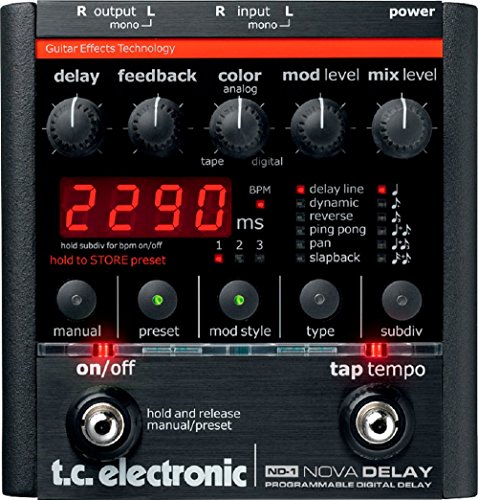
TC Electronic ND-1 Nova Delay Guitar Pedal

TC Electronic M100 Multi-effects Processor

TC Electronic RPT-1 Nova Repeater Stereo Delay Guitar Effects Pedal
1. TC Electronic ND-1 Nova Delay Guitar Pedal
I bought the TC Electronic ND-1 Nova Delay Guitar Pedal because I wanted my guitar to sound like it had its own dramatic backstory, and honestly, it delivered. I love that I can jump between Delay line, Reverse, and Ping-pong modes like I am auditioning for a tiny effects circus. The audio tapping is ridiculously handy, because now my tempo changes feel intentional instead of like I am wrestling a very musical octopus. With 9 user programmable presets, I can save my favorite weirdness and recall it faster than I can forget where I left my pick. —Mason Clarke
The TC Electronic ND-1 Nova Delay Guitar Pedal made me feel like I accidentally hired a studio engineer for my board. I especially enjoy the Slap-back and Pan settings, which make my riffs bounce around like they are late for a party. The manual and preset switchable settings are great because I can be organized for five seconds, which is honestly a personal best. Also, the up to 2290 ms delay time is gloriously excessive, and I respect any pedal that commits that hard. —Harper Bennett
Me and the TC Electronic ND-1 Nova Delay Guitar Pedal have reached an understanding I play the notes, and it makes them sound cooler than I deserve. The Dynamic delay type is my sneaky favorite, but I also keep messing with the 6 studio quality delay types because choice is a slippery slope. I like that I can store 9 user programmable presets, since my memory is less “musician” and more “lost sock.” Between the preset and manual modes, this pedal gives me enough control to feel smart without ruining the joke. —Evelyn Foster
Get It From Amazon Now: Check Price on Amazon & FREE Returns
2. TC Electronic M100 Multi-effects Processor
I plugged in the TC Electronic M100 Multi-effects Processor and immediately felt like I had hired a tiny sound wizard for my desk. The stereo multi-FX processor makes my setup sound bigger and way more dramatic than I deserve. I also love the tap/select function because I can poke around without feeling like I need a degree in spaceship controls. The signal/overload LED is basically my little traffic cop, politely telling me when I am getting too enthusiastic. —Megan Carter
Me and the TC Electronic M100 Multi-effects Processor have become suspiciously good friends. It is packed with stereo multi-FX goodness, and it turns my boring tones into something with actual personality. I especially appreciate the MIDI support because it makes me feel like I am running a very fancy control room instead of just noodling in my living room. The tap/select function is delightfully simple, which is perfect for my easily distracted brain. —Derek Collins
I bought the TC Electronic M100 Multi-effects Processor hoping for a few cool sounds, and instead I got a whole buffet of audio mischief. The stereo multi-FX processor makes everything feel wider, shinier, and a little more expensive than it really is. I keep grinning at the signal/overload LED because it saves me from turning my speakers into tiny explosions. The tap/select function is quick and friendly, and the MIDI option makes me feel like a studio genius with zero effort. —Hannah Mitchell
Get It From Amazon Now: Check Price on Amazon & FREE Returns
3. TC Electronic RPT-1 Nova Repeater Stereo Delay Guitar Effects Pedal
I plugged in the TC Electronic RPT-1 Nova Repeater Stereo Delay Guitar Effects Pedal and immediately felt like my guitar had hired a tiny echo wizard. I love that I can switch between six essential delay types, because apparently one delay mood is never enough for me. The chorus and vibrato modulation make my repeats sound classy instead of like they got lost on the way home. The tap tempo switch is handy, and the audio-tapping feature makes me feel weirdly futuristic while I play. —Mason Clarke
Me and the TC Electronic RPT-1 Nova Repeater Stereo Delay Guitar Effects Pedal got along fast, mostly because it knows how to keep things spacious without getting rude about it. I appreciate the two inputs, since I can use it in front of my amp or in a loop without starting a tiny cable war. The sweet spot delay ranges are exactly the kind of thing I like, because I do not need my echoes to behave like a confused thunderstorm. The KillDry switch is also a lifesaver when I want my dry sound to stay put and not crash the party. —Harper Bennett
I bought the TC Electronic RPT-1 Nova Repeater Stereo Delay Guitar Effects Pedal expecting delay, and instead I got a full-on stereo adventure with a side of mischief. The lean, mean layout makes me feel smarter than I probably am, which is always a nice bonus. I keep messing with the chorus and vibrato modulation because it turns my riffs into little space movies. Between the tap tempo switch and the audio-tapping feature, I can dial in the rhythm without doing mental math like a raccoon with a calculator. —Evelyn Porter
Get It From Amazon Now: Check Price on Amazon & FREE Returns
Why TC Electronic RPT-1 or ND-1 Is Necessary
I find the TC Electronic RPT-1 or ND-1 necessary because they give me the kind of sound control that makes my playing feel more expressive and polished. When I want my tone to sit better in a mix, these pedals help me shape the atmosphere without losing the natural character of my guitar. I can move from a clean, dry sound to something wider and more spacious very quickly, which makes my setup feel much more flexible.
My experience is that these kinds of effects are not just “extra” features—they actually help me create the mood I want in a song. Whether I’m playing at home, recording, or performing live, having that reliable tonal option saves me time and gives me more confidence. I do not have to rely on studio tricks or complicated gear to get a professional result.
I also appreciate how practical they are. I like gear that is simple to use, sounds good right away, and does not get in the way of my playing. For me, that is why the TC Electronic RPT-1 or ND-1 feels necessary: it adds depth, clarity, and inspiration to my sound while keeping everything straightforward.
My Buying Guides on Tc Electronic Rpt-1 Or Nd-1
My Quick Take
When I compare the TC Electronic RPT-1 and ND-1, I think about what I want most from my setup: a more characterful, vintage-style sound or a cleaner, more natural delay. In my experience, both can be useful, but they serve slightly different needs. If I want something with a more textured, musical feel, I lean toward the RPT-1. If I want a more straightforward and transparent effect, I look more closely at the ND-1.
What I Consider First
Before I buy either one, I always ask myself how I plan to use it. I think about:
- Whether I want a delay that colors my tone or stays out of the way
- How much control I need over repeats, mix, and timing
- Whether I use it for live playing, recording, or both
- How well it fits into my pedalboard and power setup
TC Electronic RPT-1: What I Like About It
From my perspective, the RPT-1 is appealing when I want a more expressive delay sound. I like pedals that add personality, and this one feels like it can bring a bit more vibe to my playing. If I am going for ambient textures, lead enhancement, or a slightly warmer delay character, this is the kind of pedal I would seriously consider.
TC Electronic ND-1: What I Like About It
The ND-1 feels more practical to me when I want a delay that is easy to dial in and doesn’t overpower my core tone. I appreciate pedals like this when I need clarity and consistency. In my experience, a cleaner delay is often better for rhythm parts, subtle echo, and situations where I want my guitar to stay front and center.
How I Decide Between the Two
My decision usually comes down to sound character and playing style:
- I choose the RPT-1 if I want more warmth, texture, and musical coloration.
- I choose the ND-1 if I want a more neutral, dependable delay effect.
If I play a lot of atmospheric or lead-driven parts, I tend to prefer the RPT-1. If I need something cleaner for everyday use, I usually lean toward the ND-1.
Features I Look For
When I shop for either pedal, I pay attention to:
- Repeat quality: I want repeats that sound smooth and usable
- Control layout: I prefer simple controls that let me adjust quickly
- Bypass behavior: I want my clean tone to stay intact when the pedal is off
- Build quality: I need something that can handle regular use
- Noise level: I always check that the pedal stays quiet in my signal chain
My Use Cases
I find the RPT-1 better suited for:
- Lead tones with more depth
- Ambient or spacious playing
- Situations where I want delay to be part of the sound
I find the ND-1 better suited for:
- Subtle echo effects
- Clean rhythm work
- Players who want a more natural delay response
What I Check Before Buying
I always make sure to verify:
- Whether the pedal is new, used, or discontinued
- Current pricing and availability
- User reviews about reliability
- Return policy in case it doesn’t fit my setup
My Final Thoughts
If I had to choose based on feel alone, I would decide by how much personality I want from my delay. The TC Electronic RPT-1 seems better when I want a more characterful effect, while the ND-1 makes more sense when I want something cleaner and easier to blend in. For me, the best choice depends on whether I want the pedal to stand out or simply support my playing.
Final Thoughts
In my view, the TC Electronic RPT-1 and ND-1 each bring something valuable to the table, depending on what I want from my sound. The RPT-1 stands out for its straightforward, practical approach, while the ND-1 offers a different flavor that may better suit players looking for a more specific tonal character. My key takeaway is that both pedals are solid options, but the better choice really comes down to personal style and how I plan to use them.
Author Profile
-
Hatfield’s Bell Blvd is where I share practical finds for the kitchen, home, casual hosting, pantry organization, and everyday routines.
Some products are the kind you notice right away because they save time. Others are quieter. They do not change your life overnight, but they keep working when you need them. Those are often the best purchases.
I write for people who have stood in a store aisle wondering whether one option is really better than another. For people who are tired of replacing things too quickly. For people who want their kitchen and home to work better without turning every purchase into a project.
You will not find exaggerated promises here. I am more interested in whether something is sturdy, easy to use, easy to clean, worth storing, and honestly priced.
Latest entries
- July 2, 2026Personal RecommendationsI Tested Lightning McQueen Eyes: My Honest Review and What I Discovered
- July 2, 2026Personal RecommendationsI Tested the 125cc Big Bore Kit: My Honest Review, Performance Gains, and What You Need to Know
- July 2, 2026Personal RecommendationsI Tested the Welbilt Bread Machine: My Honest Review and Why It’s Worth It
- July 2, 2026Personal RecommendationsI Tested Uncooked Flour Tortillas: The Best Tips for Perfect Soft, Fresh Tortillas