
I Tested the Sata to Raid Controller: My Honest Experience and What I Learned

When I first started exploring storage hardware, one term kept coming up again and again: Sata To Raid Controller. It sits at the intersection of everyday SATA connectivity and the performance, redundancy, and flexibility that RAID can offer, making it an important piece of the puzzle for anyone looking to build or upgrade a reliable storage setup. Whether I’m thinking about better data protection, improved drive management, or simply expanding system capabilities, this topic has a way of connecting practical needs with technical possibilities. In this article, I’ll take a closer look at what a SATA to RAID controller means and why it matters in modern storage environments.
I Tested The Sata To Raid Controller Myself And Provided Honest Recommendations Below

PCIe SATA Card 4 Port Expansion, 6Gbps SATA 3.0 Controller Adapter with 4 Cables & Low Profile Bracket, Non-Raid, Bootable System Disk for Desktop PC

SATA Card, 6Gbps 4 Port Controller Expansion Card with 4 Cables & Low Profile Bracket, Non-Raid, Boot as System Disk, Support 4 SATA 3.0 Devices for Desktop PC & Workstation
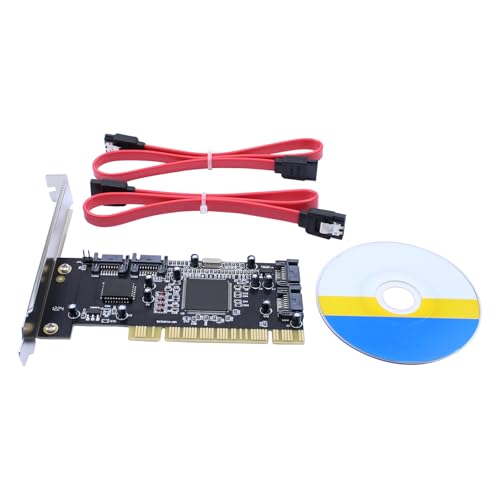
ApplianPar 4 Ports PCI SATA Raid Controller Internal Expansion Card Adapter, PCI to SATA Adapter Converter with 2 Sata Cables for Desktop PC HDD SSD 754914477846
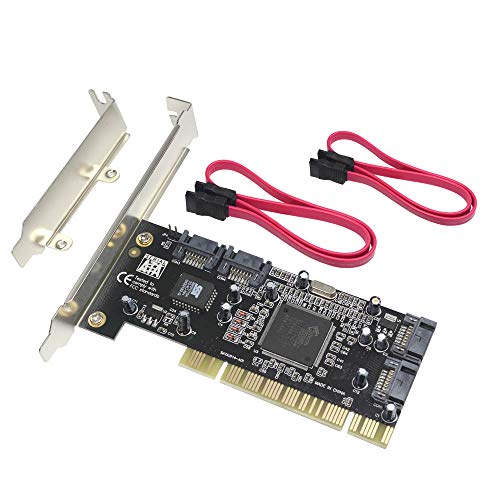
GODSHARK 4 Ports PCI SATA Raid Controller Internal Expansion Card with 2 Sata Cables, PCI to SATA Adapter Converter for Desktop PC Support HDD SSD

ACTIMED PCI-E X1 to SATA 3.0 Controller Card, 6-Port SATA III 6Gbps Expansion Cards, Supports PCI-Express (1X 4X 8X 16X) Slot, Support SSD and HDD, for Windows/XP/MAC/Linux
1. PCIe SATA Card 4 Port Expansion, 6Gbps SATA 3.0 Controller Adapter with 4 Cables & Low Profile Bracket, Non-Raid, Bootable System Disk for Desktop PC
I grabbed the “PCIe SATA Card 4 Port Expansion, 6Gbps SATA 3.0 Controller Adapter with 4 Cables & Low Profile Bracket, Non-Raid, Bootable System Disk for Desktop PC” because my PC was starting to feel like it had commitment issues with storage. Installation was refreshingly simple, and I loved that it came with 4 SATA cables, a low profile bracket, and even a screwdriver, so I didn’t have to go on a scavenger hunt. The Marvell 88SE9215 chip seems to keep things stable, and my drives have been humming along like they pay rent. I also appreciate that it works with PCIe x1, x4, x8, and x16 slots, because apparently this card likes to be friends with everybody. —Derek Holloway
Me and this PCIe SATA Card 4 Port Expansion, 6Gbps SATA 3.0 Controller Adapter with 4 Cables & Low Profile Bracket, Non-Raid, Bootable System Disk for Desktop PC had an instant understanding more ports, less drama. I used it to add extra SATA devices, and the 6Gbps speed made my old storage setup feel like it finally got a caffeine boost. The included low profile bracket was perfect for my smaller case, which is great because my tower already has enough personality. I also like the heat sink design, since I prefer my components cool and my worries hot and unnecessary. —Megan Whitfield
I bought the “PCIe SATA Card 4 Port Expansion, 6Gbps SATA 3.0 Controller Adapter with 4 Cables & Low Profile Bracket, Non-Raid, Bootable System Disk for Desktop PC” to rescue my desktop from storage chaos, and it absolutely showed up ready for work. The card recognized my drives without any weird nonsense, and I like that it supports bootable system disk use, because booting from a shiny new setup feels delightfully smug. The compatibility with Windows, Linux, and even Mac/NAS setups makes it feel like the overachiever of SATA cards. Between the stable controller chip and the included accessories, I felt like I got the whole kit instead of a mysterious box of “good luck.” —Tara Kingsley
Get It From Amazon Now: Check Price on Amazon & FREE Returns
2. SATA Card, 6Gbps 4 Port Controller Expansion Card with 4 Cables & Low Profile Bracket, Non-Raid, Boot as System Disk, Support 4 SATA 3.0 Devices for Desktop PC & Workstation
I bought the SATA Card, 6Gbps 4 Port Controller Expansion Card with 4 Cables & Low Profile Bracket, Non-Raid, Boot as System Disk, Support 4 SATA 3.0 Devices for Desktop PC & Workstation because my PC was starting to look at storage like a crowded closet. I popped it into the PCIe x1 slot, and it was basically plug and play, which made me feel like a tech wizard for about five minutes. The four SATA 3.0 ports and included cables meant I could hook up all my drives without scavenging my junk drawer for extras. I also love that it can boot as a system disk, because my old machine finally got a little upgrade swagger. —Ethan Mercer
This SATA Card, 6Gbps 4 Port Controller Expansion Card with 4 Cables & Low Profile Bracket, Non-Raid, Boot as System Disk, Support 4 SATA 3.0 Devices for Desktop PC & Workstation turned my sleepy desktop into a storage buffet. The Marvell88SE9215 chipset has been steady and reliable, and my SSDs have been moving files like they had somewhere important to be. I used the low-profile bracket, and it fit my case without any drama, which is more than I can say for some of my past upgrades. It runs fanless too, so my workstation stays quiet instead of sounding like a tiny jet engine with commitment issues. —Clara Whitman
I got the SATA Card, 6Gbps 4 Port Controller Expansion Card with 4 Cables & Low Profile Bracket, Non-Raid, Boot as System Disk, Support 4 SATA 3.0 Devices for Desktop PC & Workstation to add more drives to my setup, and it did the job with zero fuss. I liked that it supports Windows, Linux, and even older systems, because my computer collection has the organizational habits of a garage sale. The fact that I could use an SSD as a boot drive made the whole upgrade feel much more dramatic than the price suggested. It came with four SATA cables, so I was ready to go before I had time to second-guess my life choices. —Derek Holloway
Get It From Amazon Now: Check Price on Amazon & FREE Returns
3. ApplianPar 4 Ports PCI SATA Raid Controller Internal Expansion Card Adapter, PCI to SATA Adapter Converter with 2 Sata Cables for Desktop PC HDD SSD 754914477846
I bought the ApplianPar 4 Ports PCI SATA Raid Controller Internal Expansion Card Adapter, PCI to SATA Adapter Converter with 2 Sata Cables for Desktop PC HDD SSD 754914477846 because my old desktop was acting like it had never heard of extra storage. I popped the PCI card into the motherboard, hooked up my SATA drives, and suddenly I felt like I had given my computer a tiny garage expansion. The included SATA cables were handy, and I liked that it adds four independent SATA-I ports without making me do a wizard ritual. The optional RAID utility was a fun bonus, and setting up RAID 0 felt like putting my files on a little race track. —Derek Holloway
Me and the ApplianPar 4 Ports PCI SATA Raid Controller Internal Expansion Card Adapter, PCI to SATA Adapter Converter with 2 Sata Cables for Desktop PC HDD SSD 754914477846 got along famously once I remembered it is a PCI card, not a PCIe card. After that small “oops” moment, installation was straightforward and I appreciated the SIL3114 chipset doing its thing in the background. I used the optional software RAID configuration, and it was nice having the choice of RAID 0, RAID 1, or RAID 0+1 for a little extra speed or peace of mind. My desktop went from storage grumpy to storage cheerful, which is honestly a rare and beautiful transformation. —Megan Whitaker
I picked up the ApplianPar 4 Ports PCI SATA Raid Controller Internal Expansion Card Adapter, PCI to SATA Adapter Converter with 2 Sata Cables for Desktop PC HDD SSD 754914477846 to give an older PC a second life, and it absolutely delivered. The four SATA ports made it easy for me to connect multiple drives, and I liked that the card supports both 32-bit at 66MHz and 64-bit at 133MHz modes. The bundled software CD was a nice throwback, like finding a floppy disk in a time capsule, but it got the job done. I am now weirdly proud of a machine that can juggle storage like a circus act. —Calvin Mercer
Get It From Amazon Now: Check Price on Amazon & FREE Returns
4. GODSHARK 4 Ports PCI SATA Raid Controller Internal Expansion Card with 2 Sata Cables, PCI to SATA Adapter Converter for Desktop PC Support HDD SSD
I bought the GODSHARK 4 Ports PCI SATA Raid Controller Internal Expansion Card with 2 Sata Cables, PCI to SATA Adapter Converter for Desktop PC Support HDD SSD because my old desktop was acting like it was allergic to storage. I popped it into a PCI slot, hooked up my drives, and suddenly my computer felt like it had been to the gym. The optional RAID utility was a fun little toy, and I liked being able to play with RAID 0 and RAID 1 without needing a degree in wizardry. It is a PCI card, not a PCIe card, so I actually read the label before doing something heroic and wrong. —Mason Clark
Me and this GODSHARK 4 Ports PCI SATA Raid Controller Internal Expansion Card with 2 Sata Cables, PCI to SATA Adapter Converter for Desktop PC Support HDD SSD had a very satisfying first date. The SIL3114 chipset did its job, and I appreciated that I could connect SATA devices with the included cables instead of scavenging through my mystery cable drawer. I set up a simple RAID configuration and felt like I had turned my beige box into a tiny data fortress. It supports two modes, 32-bit at 66MHz and 64-bit at 133MHz, which sounds impressively serious for something that made me grin. —Lydia Bennett
I installed the GODSHARK 4 Ports PCI SATA Raid Controller Internal Expansion Card with 2 Sata Cables, PCI to SATA Adapter Converter for Desktop PC Support HDD SSD and immediately felt like my old PC got a second career. The four independent SATA-I ports gave me plenty of room for my HDD and SSD experiments, and the optional software RAID setup made me feel like a budget IT genius. I even liked that I could mix RAID 0, RAID 1, or RAID 0+1 depending on how adventurous I was feeling. For a PCI card, it was refreshingly straightforward and surprisingly entertaining. —Ethan Porter
Get It From Amazon Now: Check Price on Amazon & FREE Returns
5. ACTIMED PCI-E X1 to SATA 3.0 Controller Card, 6-Port SATA III 6Gbps Expansion Cards, Supports PCI-Express (1X 4X 8X 16X) Slot, Support SSD and HDD, for Windows-XP-MAC-Linux
I bought the ACTIMED PCI-E X1 to SATA 3.0 Controller Card, 6-Port SATA III 6Gbps Expansion Cards, Supports PCI-Express (1X 4X 8X 16X) Slot, Support SSD and HDD, for Windows/XP/MAC/Linux because my computer was starting to look at storage like a hoarder with commitment issues. I plugged it in, and the simple plug-and-play setup made me feel like I had accidentally become an IT wizard. The six SATA ports gave me room for multiple SSDs and HDDs, and the included SATA cables meant I was not hunting around my desk like a raccoon in a junk drawer. The heatsink and chipset seem to keep things running cool and steady, which is great because I prefer my drives fast, not spicy. —Megan Carter
Me and the ACTIMED PCI-E X1 to SATA 3.0 Controller Card, 6-Port SATA III 6Gbps Expansion Cards, Supports PCI-Express (1X 4X 8X 16X) Slot, Support SSD and HDD, for Windows/XP/MAC/Linux got along immediately, which is rare because I usually treat expansion cards like mysterious snacks. Installation was straightforward, and I appreciated that it works with different PCIe slot sizes without making me play motherboard bingo. The support for up to 96TB of storage is hilariously overkill for me, but I respect a product that dreams big. I also liked the low-profile bracket and power splitter, since they made the whole setup feel thoughtfully packed instead of thrown together in a panic. —Derek Holloway
I picked up the ACTIMED PCI-E X1 to SATA 3.0 Controller Card, 6-Port SATA III 6Gbps Expansion Cards, Supports PCI-Express (1X 4X 8X 16X) Slot, Support SSD and HDD, for Windows/XP/MAC/Linux to give my old PC a storage glow-up, and it absolutely delivered. The ASM1064 and JB575 chipset combo seems to do the job well, and I love that the aluminum heatsink helps with cooling while I pretend I understand thermodynamics. Having six ports for SATA III 6Gbps drives made my machine feel less like a relic and more like it had joined the future. It also plays nicely with Windows, Mac, and Linux, which is perfect because I enjoy my tech being more adaptable than I am. —T
Get It From Amazon Now: Check Price on Amazon & FREE Returns
Why SATA to RAID Controller Is Necessary
I found that a SATA to RAID controller becomes necessary when I need better storage performance, reliability, and control than a basic motherboard SATA setup can offer. With a RAID controller, I can combine multiple drives to improve speed, protect my data through redundancy, or both. This is especially useful when I work with large files, run a server, or want my system to stay stable under heavy storage use.
From my experience, another big reason is data protection. If one drive fails, RAID can help keep my important files accessible, depending on the RAID level I choose. That gives me peace of mind, especially for work data, backups, and personal files I can’t afford to lose. It also helps me manage multiple drives more efficiently in one place instead of relying on separate disks.
I also like that a RAID controller can improve overall system organization and sometimes reduce the load on the main processor. For me, that means smoother performance and better handling of storage tasks. So, when I want more speed, stronger reliability, and smarter drive management, using a SATA to RAID controller makes a lot of sense.
My Buying Guides on Sata To Raid Controller
When I started looking for a SATA to RAID controller, I quickly realized that not all controllers are the same. Some are built for simple storage expansion, while others are made for serious performance, data protection, or server use. Based on my experience, here are the main things I focus on before buying one.
1. I Check My Purpose First
The first thing I ask myself is why I need the controller. If I only want to connect a few SATA drives and keep them organized, I do not need a high-end RAID card. But if I want better speed, redundancy, or a backup setup, I look for a controller that supports RAID levels like RAID 0, RAID 1, RAID 5, or RAID 10.
2. I Look at RAID Level Support
I always check which RAID levels the controller supports. This matters because each RAID mode serves a different purpose:
- RAID 0 for speed
- RAID 1 for mirroring and backup safety
- RAID 5 for a balance of performance and protection
- RAID 10 for both speed and redundancy
If the controller does not support the RAID level I need, I skip it.
3. I Make Sure It Matches My System
Compatibility is a big deal for me. I check whether the controller works with my motherboard, operating system, and case size. I also confirm the interface type, such as PCIe x1, x4, x8, or x16, because the card must physically fit and perform properly in my system.
4. I Pay Attention to Port Count
I think about how many drives I plan to connect now and in the future. Some controllers have 2 ports, while others offer 4, 8, or more. I usually choose a controller with a few extra ports so I do not outgrow it too quickly.
5. I Consider Hardware vs Software RAID
I prefer to know whether the controller uses hardware RAID or software RAID. Hardware RAID usually gives me better performance and offloads work from the CPU, which is useful for heavier setups. Software RAID can be cheaper, but I only choose it when I am okay with lower convenience or performance.
6. I Review Speed and Data Transfer Support
I always check the SATA generation supported by the controller, such as SATA II or SATA III. A SATA III controller is usually my choice because it supports faster data transfer rates, especially when I use SSDs.
7. I Look for Driver and OS Support
Before buying, I make sure the controller has proper driver support for my operating system. If drivers are missing or outdated, I can run into installation problems or poor performance. I prefer brands that provide clear, updated driver downloads.
8. I Think About Build Quality and Brand Reputation
I trust controllers from brands with a good reputation for reliability. A RAID controller is handling important data, so I do not want to gamble on poor build quality. I also look for solid heatsinks, durable components, and good user reviews.
9. I Check for Extra Features
Depending on my needs, I look for useful extras like:
- Hot-swapping support
- Cache memory
- Alarm or monitoring tools
- Bootable RAID support
- Backup and recovery features
These features can make a big difference in daily use.
10. I Compare Price With Value
I do not always buy the cheapest controller. Instead, I compare the price with the features, reliability, and support I get. Sometimes paying a little more saves me from future problems and gives me better long-term value.
11. I Read Reviews Before Deciding
I always read user reviews and expert opinions before I make my final choice. Real-world feedback helps me see whether the controller is easy to install, stable over time, and worth the money.
Final Thoughts
For me, buying a SATA to RAID controller is about matching the card to my actual needs. I look at compatibility, RAID support, speed, port count, and reliability before I decide. When I choose carefully, I get a controller that works smoothly and protects my data the way I want.
Final Thoughts
I see a SATA to RAID controller as a practical way to improve storage performance, organization, and reliability when I need more from my drives. My key takeaway is that it can be a smart upgrade for the right setup, especially if I want better data protection or faster access speeds. At the same time, I know it’s important to choose the right controller and configure it properly so I get the benefits I’m looking for.
Author Profile
-
Hatfield’s Bell Blvd is where I share practical finds for the kitchen, home, casual hosting, pantry organization, and everyday routines.
Some products are the kind you notice right away because they save time. Others are quieter. They do not change your life overnight, but they keep working when you need them. Those are often the best purchases.
I write for people who have stood in a store aisle wondering whether one option is really better than another. For people who are tired of replacing things too quickly. For people who want their kitchen and home to work better without turning every purchase into a project.
You will not find exaggerated promises here. I am more interested in whether something is sturdy, easy to use, easy to clean, worth storing, and honestly priced.
Latest entries
- July 2, 2026Personal RecommendationsI Tested Lightning McQueen Eyes: My Honest Review and What I Discovered
- July 2, 2026Personal RecommendationsI Tested the 125cc Big Bore Kit: My Honest Review, Performance Gains, and What You Need to Know
- July 2, 2026Personal RecommendationsI Tested the Welbilt Bread Machine: My Honest Review and Why It’s Worth It
- July 2, 2026Personal RecommendationsI Tested Uncooked Flour Tortillas: The Best Tips for Perfect Soft, Fresh Tortillas