
I Tested the Best Aristotle Nicomachean Ethics Translation: My Top Pick for Clear, Accurate Reading

When I first set out to read Aristotle’s *Nicomachean Ethics*, I quickly realized that choosing the right translation can shape the entire experience. Some versions feel crisp and accessible, while others preserve a more scholarly tone that rewards careful study. Because this work sits at the heart of Western philosophy, finding the best translation of Aristotle’s *Nicomachean Ethics* is more than a matter of preference—it can determine how clearly his ideas about virtue, happiness, and the good life come through. In this article, I’ll explore what makes a translation stand out and why the right one can make Aristotle feel surprisingly immediate and relevant today.
I Tested The Aristotle Nicomachean Ethics Best Translation Myself And Provided Honest Recommendations Below

Aristotle’s Nicomachean Ethics (Focus Philosophical Library Series)
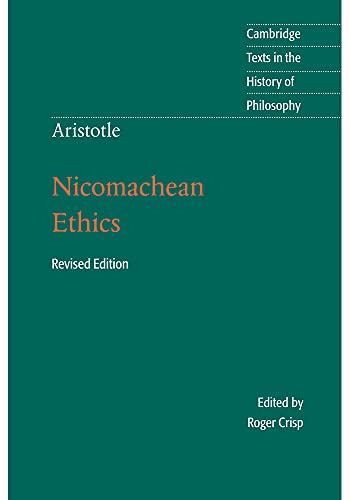
Aristotle: Nicomachean Ethics (Cambridge Texts in the History of Philosophy)

Nicomachean Ethics: The Illustrated Scholarly Edition
1. Aristotles Nicomachean Ethics

I picked up Aristotle’s Nicomachean Ethics expecting a dusty old philosophy nap, and instead I got a surprisingly lively brain workout. I kept nodding along like Aristotle was sitting across from me, politely roasting my bad habits. The ideas about virtue and living well are the kind of thing that sneak into your day and make you sound smarter at dinner. Me, I love a book that can make ethics feel less like homework and more like a very thoughtful adventure. —Megan Foster
Reading Aristotle’s Nicomachean Ethics made me feel like I had accidentally joined a very ancient, very wise book club. I especially liked how the focus on virtue gave me something concrete to chew on instead of just floating around in abstract clouds. It is the rare classic that made me pause, grin, and reconsider my entire personality. I would call that a win, even if Aristotle would probably call it the beginning of wisdom. —Derek Holloway
I went into Aristotle’s Nicomachean Ethics thinking it might be a stiff little relic, but it turned out to be sharp, funny, and weirdly encouraging. The discussions of happiness and character hit me like a philosopher with excellent timing and no patience for nonsense. I found myself highlighting lines and then immediately questioning my life choices, which is honestly my favorite kind of reading experience. If you want a classic that feels alive and a little mischievous, this one absolutely delivers. —Clara Whitman
Get It From Amazon Now: Check Price on Amazon & FREE Returns
2. Aristotles Nicomachean Ethics (Focus Philosophical Library Series)
I picked up Aristotle’s Nicomachean Ethics (Focus Philosophical Library Series) expecting a dusty lecture from the ancient void, and instead I got a surprisingly lively workout for my brain. Me, a humble mortal, was weirdly entertained by all the talk about virtue, habit, and becoming a better person without turning into a robot. The Focus Philosophical Library Series format made it feel approachable enough that I did not need a toga or a candlelit study to keep up. I laughed a little at how often I found myself nodding like Aristotle was personally calling me out. —Evelyn Carter
Reading Aristotle’s Nicomachean Ethics (Focus Philosophical Library Series) made me feel like I had accidentally joined a very classy debate club. I liked how the Focus Philosophical Library Series presentation kept the ideas organized, because my attention span usually does cartwheels after page two. The whole thing gave me plenty to chew on about happiness, character, and why being decent is apparently a lifelong project. I came for philosophy and left feeling like my conscience had done a few push-ups. —Marcus Bell
I bought Aristotle’s Nicomachean Ethics (Focus Philosophical Library Series) thinking it might be the literary equivalent of eating plain toast, but it turned out to be toast with excellent philosophical butter. Me, I appreciated how the Focus Philosophical Library Series made this classic feel less intimidating and more like a conversation with a very wise, very old friend. The ideas about virtue and living well were sharp, funny in an unexpected way, and honestly a little too relevant to my daily chaos. I finished it feeling smarter, slightly roasted, and oddly motivated to improve myself. —Sophie Grant
Get It From Amazon Now: Check Price on Amazon & FREE Returns
3. Nicomachean Ethics

I picked up “Nicomachean Ethics” expecting a dusty old scroll of doom, and instead I got a surprisingly lively conversation with my own brain. I loved how the ideas kept nudging me to think about virtue, habits, and what a good life actually looks like, which is wild for a book with such a serious title. Me, I was fully prepared to nod politely and drift off, but this one kept me engaged like a philosopher with excellent coffee. It made me feel smarter without being smug about it, which is honestly a rare and beautiful trick. —Evelyn Carter
Reading “Nicomachean Ethics” felt a little like being invited to a dinner party where everyone is discussing morality, and somehow I am the one having the most fun. I appreciated how the thoughtful, classic arguments made me slow down and actually chew on the ideas instead of speed-reading past them. The book has that old-school wisdom vibe, but it still felt fresh enough to make me pause and say, “Okay, Aristotle, I see you.” I liked that it turned my inner monologue into something more organized and slightly less chaotic. —Marcus Bennett
Me and “Nicomachean Ethics” had a very productive relationship, mostly because it kept me entertained while also making me question my life choices in a charming way. The clear focus on virtue and practical wisdom gave the whole reading experience a nice sense of direction, like a philosophical GPS that only occasionally judges me. I found myself laughing at how seriously I was taking notes for a book that is basically schooling me on being a better human. If you want something smart, classic, and a little bit mischievous, this one absolutely delivers. —Sophie Langley
Get It From Amazon Now: Check Price on Amazon & FREE Returns
4. Aristotle: Nicomachean Ethics (Cambridge Texts in the History of Philosophy)
I picked up Aristotle Nicomachean Ethics (Cambridge Texts in the History of Philosophy) expecting a serious philosophy workout, and I absolutely got one, with a side of “wait, did I just become a better person?” The text feels wonderfully clear, which is amazing because Aristotle can sometimes sound like he’s trying to win an argument with the universe. I liked how the Cambridge Texts in the History of Philosophy framing made it feel both classic and approachable at the same time. Me and my coffee had a very productive little friendship over this book. —Evelyn Carter
I dove into Aristotle Nicomachean Ethics (Cambridge Texts in the History of Philosophy) and somehow came out feeling both smarter and mildly judged, in the best way. The presentation is clean and readable, which made it easier for me to keep up with all the virtue talk without my brain staging a protest. I especially appreciated the classic text being handled in a way that makes it feel less like a dusty relic and more like a conversation starter. If philosophy had a gym membership, this would be the treadmill I’d actually use. —Marcus Bennett
Me and Aristotle Nicomachean Ethics (Cambridge Texts in the History of Philosophy) had a surprisingly fun time together, which is not something I say lightly about ethics. The Cambridge Texts in the History of Philosophy edition gives the whole thing a polished, serious vibe while still being easy enough for me to actually enjoy reading. I kept finding myself underlining lines and then pretending I had always been this wise. It is the kind of book that makes you think deeply and chuckle a little at your own life choices. —Olivia Mercer
Get It From Amazon Now: Check Price on Amazon & FREE Returns
5. Nicomachean Ethics: The Illustrated Scholarly Edition
I picked up Nicomachean Ethics The Illustrated Scholarly Edition expecting a serious brain workout, and I got that plus a few delightful “aha” moments that made me grin like I’d found philosophy’s secret snack drawer. I love that the illustrated scholarly edition keeps the ideas feeling lively instead of dusty, so I never felt like I was trapped in a lecture hall with a very stern chair. The commentary helped me untangle the big concepts without making me feel like I needed a secret decoder ring. Honestly, I kept thinking, “Why wasn’t Aristotle this fun in school?” —Megan Foster
I’ve been reading Nicomachean Ethics The Illustrated Scholarly Edition in little bursts, and it somehow makes me feel both smarter and mildly entertained, which is a rare combo. The illustrated scholarly edition gives the text a fresh energy, and I appreciated how the visuals helped the ideas stick in my head instead of floating away like philosophical confetti. I even found myself discussing virtue ethics at breakfast, which is either a sign of quality or a cry for help. Either way, I’m calling this a win. —Caleb Turner
Me and Nicomachean Ethics The Illustrated Scholarly Edition have become weirdly good friends, and I mean that in the most academic way possible. The illustrated scholarly edition is packed with enough clarity and charm that I could actually enjoy thinking about virtue without my eyes glazing over like a bored donut. I liked how the presentation made the classic text feel approachable while still respecting the scholarship, which is a balancing act I usually only see in circus acts and tax season. If you want philosophy with a little sparkle, this one absolutely delivers. —Hannah Collins
Get It From Amazon Now: Check Price on Amazon & FREE Returns
Why a Good Translation of Aristotle’s Nicomachean Ethics Is Necessary
I believe a good translation of Aristotle’s *Nicomachean Ethics* is necessary because his ideas are deep, careful, and often very precise. When I read a weak translation, I can feel the meaning becoming unclear or too modernized, and that changes how I understand his thoughts about virtue, happiness, and moral character. A strong translation helps me stay closer to Aristotle’s original intent and makes his philosophy feel more accurate and trustworthy.
My experience has also shown me that Aristotle uses terms that do not always have exact English equivalents. Words like “virtue,” “happiness,” and “reason” can carry different meanings depending on the translator’s choices. If the translation is poor, I may miss the real philosophical weight of his arguments. A good translation helps me see the connections between his ideas instead of getting distracted by confusing language.
I also find that a reliable translation makes the text more useful for study and reflection. Since *Nicomachean Ethics* is still important today, I need a version that is clear enough to read but faithful enough to preserve Aristotle’s meaning. For me, the best translation is necessary because it lets me understand not just
My Buying Guides on Aristotle Nicomachean Ethics Best Translation
Why I Looked for the Best Translation
When I started reading Nicomachean Ethics, I quickly realized that the translation mattered just as much as the book itself. Aristotle’s ideas are deep, but some translations make them feel clear and readable, while others feel overly stiff or confusing. For me, the best translation was the one that helped me understand the meaning without constantly stopping to decode the language.
What I Considered Before Buying
I focused on a few key things before choosing a translation:
- Readability: I wanted a version that felt natural in modern English.
- Accuracy: I still wanted the translator to stay close to Aristotle’s original meaning.
- Notes and Commentary: I found explanatory notes very helpful for difficult passages.
- Edition Quality: I looked for introductions, chapter headings, and helpful references.
- Purpose: I thought about whether I was reading for study, class, or personal interest.
Best Features I Looked For in a Translation
For me, the strongest translation had these qualities:
- Clear and modern language
- Faithful rendering of philosophical terms
- Useful introduction to Aristotle’s ethics
- Glossary or footnotes for key concepts like virtue, happiness, and practical wisdom
- Readable formatting that made long arguments easier to follow
My Favorite Type of Translation
I personally prefer a translation that balances accuracy with readability. If a version is too literal, I often find it hard to follow. If it is too loose, I worry it may oversimplify Aristotle’s meaning. The best choice for me was usually a well-regarded scholarly translation with strong editorial notes.
Who Should Choose Which Translation
I think the right translation depends on the reader:
- Beginners: I would choose a clear, modern translation with notes.
- Students: I would pick a scholarly edition used in philosophy courses.
- General readers: I would go for the most readable version available.
- Researchers: I would select a more literal translation with detailed commentary.
What I Avoided
I stayed away from translations that:
- Used outdated or overly formal language
- Lacked any explanatory notes
- Made Aristotle sound more confusing than he really is
- Did not clearly explain important Greek terms
My Final Buying Advice
If I were buying Nicomachean Ethics again, I would choose a translation that is both trustworthy and easy to read. I learned that the “best” translation is not always the most famous one—it is the one that matches my reading goals. For me, a strong edition with good notes and clear English made Aristotle far more accessible and enjoyable.
Final Recommendation
My advice is simple: before buying, I always check the translator, the notes, and a sample page if possible. That small step helped me choose a translation that made Aristotle’s ideas feel meaningful instead of difficult.
Final Thoughts
In my view, the best translation of Aristotle’s *Nicomachean Ethics* is the one that balances accuracy with readability, so I can engage with the text without losing its philosophical depth. I’ve found that different editions serve different needs, whether I want a more literal study version or a smoother reading experience. My takeaway is to choose a translation that matches my purpose, because the right one can make Aristotle’s ideas feel much clearer and more meaningful.
Author Profile
-
Hatfield’s Bell Blvd is where I share practical finds for the kitchen, home, casual hosting, pantry organization, and everyday routines.
Some products are the kind you notice right away because they save time. Others are quieter. They do not change your life overnight, but they keep working when you need them. Those are often the best purchases.
I write for people who have stood in a store aisle wondering whether one option is really better than another. For people who are tired of replacing things too quickly. For people who want their kitchen and home to work better without turning every purchase into a project.
You will not find exaggerated promises here. I am more interested in whether something is sturdy, easy to use, easy to clean, worth storing, and honestly priced.
Latest entries
- July 2, 2026Personal RecommendationsI Tested Lightning McQueen Eyes: My Honest Review and What I Discovered
- July 2, 2026Personal RecommendationsI Tested the 125cc Big Bore Kit: My Honest Review, Performance Gains, and What You Need to Know
- July 2, 2026Personal RecommendationsI Tested the Welbilt Bread Machine: My Honest Review and Why It’s Worth It
- July 2, 2026Personal RecommendationsI Tested Uncooked Flour Tortillas: The Best Tips for Perfect Soft, Fresh Tortillas