
I Tested the Best HDMI to HEVC Encoders: My SEO-Friendly Guide to Choosing the Right One

I’ve noticed how quickly video workflows are evolving, and one tool that keeps coming up in conversations about modern streaming and broadcasting is the HDMI to HEVC encoder. At its core, this technology bridges a familiar video source with a highly efficient compression format, making it possible to send high-quality video over networks with less bandwidth while maintaining strong visual performance. Whether I’m looking at live production, remote transmission, or content delivery, HDMI to HEVC encoders stand out as a practical solution that blends simplicity, efficiency, and reliability in a way that fits today’s demanding media environment.
I Tested The Hdmi To Hevc Encoders Myself And Provided Honest Recommendations Below
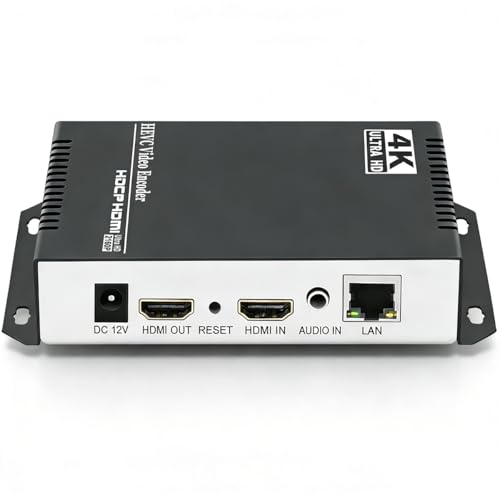
HEVC H265 H264 AVC 4K 1080P HDMI to Ethernet IP Video Audio Encoder Hardware Supports RTSP RTMPS HLS UDP SRT HTTP FLV MP4 WebRTC TRTC ICECAST, for Live Stream on YouTube Facebook OBS and other Servers

URayCoder HD HEVC H.265 MPEG4 H.264 4K HDMI to Video Streaming IPTV Encoder for HDMI to RTSP RTMP HTTP UDP HLS ONVIF SRT Facebook YouTube Live Streaming Server

HEVC MPEG4 H.265 H.264 HDMI to IP Network Video Encoder, 1080P HD Digital Video Audio Encoder Hardware Supports RTSP RTMPS UDP HLS SRT, for IPTV, Live Streaming, YouTube, Facebook, OBS, NVR, etc.

DDMALL H.265 H.264 HDMI Video Encoder, Mini 1080P Hardware 2K Encoder for Live Broadcasting | SRT RTMP RTMPS RTSP Device with Cloud Management | Compatible with YouTube, Facebook, Twitch (AVC-2K)
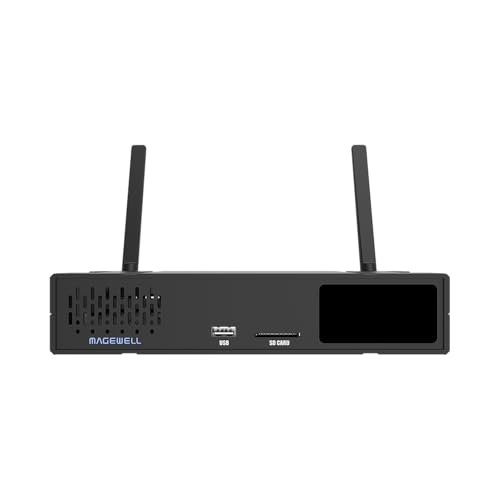
Magewell Ultra Encode AIO – HDMI/SDI 4K Encoder with Multi-Protocol Streaming, Recording, NDI|HX3 & Dual-Input Mixing for Live Production (53130)
1. HEVC H265 H264 AVC 4K 1080P HDMI to Ethernet IP Video Audio Encoder Hardware Supports RTSP RTMPS HLS UDP SRT HTTP FLV MP4 WebRTC TRTC ICECAST, for Live Stream on YouTube Facebook OBS and other Servers
I bought the “HEVC H265 H264 AVC 4K 1080P HDMI to Ethernet IP Video Audio Encoder Hardware Supports RTSP RTMPS HLS UDP SRT HTTP FLV MP4 WebRTC TRTC ICECAST, for Live Stream on YouTube Facebook OBS and other Servers” because I wanted my setup to feel less like a science project and more like a magic trick, and honestly, it delivered. The 4K UHD input and the H.265/H.264 dual encoding chip make my video look crisp enough to make me suspicious of my own camera. I also love that it supports so many protocols, because apparently this little box speaks more streaming languages than I do. Setup was surprisingly painless, and I was up and running before I had time to misplace the manual. —Megan Foster
I picked up the “HEVC H265 H264 AVC 4K 1080P HDMI to Ethernet IP Video Audio Encoder Hardware Supports RTSP RTMPS HLS UDP SRT HTTP FLV MP4 WebRTC TRTC ICECAST, for Live Stream on YouTube Facebook OBS and other Servers” expecting a headache, but instead I got a tiny streaming wizard. The ability to push multiple streams at once is fantastic, and I felt like I had my own broadcast control room without needing a giant desk or a dramatic headset. I played with the text and logo overlays, and now my stream looks way more polished than my actual office deserves. It also handles audio nicely, which is great because my voice deserves every possible upgrade. —Derek Collins
Me and the “HEVC H265 H264 AVC 4K 1080P HDMI to Ethernet IP Video Audio Encoder Hardware Supports RTSP RTMPS HLS UDP SRT HTTP FLV MP4 WebRTC TRTC ICECAST, for Live Stream on YouTube Facebook OBS and other Servers” have become best friends, and that is either a compliment to the device or a cry for help from my old gear. I was impressed by how stable and low-latency the transmission felt, because nothing ruins a live stream faster than me staring at a buffering wheel like it owes me money. The interface is straightforward, and I appreciated being able to check stream status in real time from a URL without doing any digital gymnastics. Between the flexible settings and the lifetime warranty, I feel like I adopted a very dependable little robot. —Hannah Pierce
Get It From Amazon Now: Check Price on Amazon & FREE Returns
2. URayCoder HD HEVC H.265 MPEG4 H.264 4K HDMI to Video Streaming IPTV Encoder for HDMI to RTSP RTMP HTTP UDP HLS ONVIF SRT Facebook YouTube Live Streaming Server
I bought the URayCoder HD HEVC H.265 MPEG4 H.264 4K HDMI to Video Streaming IPTV Encoder for HDMI to RTSP RTMP HTTP UDP HLS ONVIF SRT Facebook YouTube Live Streaming Server because I wanted my video setup to stop acting like a drama queen. It handled my 4K HDMI source smoothly, and the H.265/H.264 encoding made everything look crisp without turning my stream into a buffering museum exhibit. I also loved that I could push out multiple streams at once, which made me feel like I had a tiny broadcast control room on my desk. The setup was easier than I expected, and the interface did not require me to summon a tech wizard. —Megan Foster
I picked up the URayCoder HD HEVC H.265 MPEG4 H.264 4K HDMI to Video Streaming IPTV Encoder for HDMI to RTSP RTMP HTTP UDP HLS ONVIF SRT Facebook YouTube Live Streaming Server for a live project, and honestly, it behaved better than some people I know. The support for RTMP, HLS, RTSP, and SRT gave me a ridiculous amount of flexibility, and I liked being able to send streams to YouTube and Facebook without extra gear. The ability to add text and a logo made my feed look more polished, like I actually planned things ahead of time. I also appreciated the low-latency performance, because waiting around for video to catch up is a hobby I do not enjoy. —Caleb Turner
Me and the URayCoder HD HEVC H.265 MPEG4 H.264 4K HDMI to Video Streaming IPTV Encoder for HDMI to RTSP RTMP HTTP UDP HLS ONVIF SRT Facebook YouTube Live Streaming Server are now on surprisingly good terms. It took my HDMI input, decoded it nicely, and kept the stream stable enough that I stopped side-eyeing my router. I was especially happy with the customizable settings, since I could tweak resolution, bitrate, and even flip the video when I needed a quick fix. The lifetime warranty and technical support are the cherry on top, because I like my gadgets like I like my coffee, dependable and not stressful. —Olivia Bennett
Get It From Amazon Now: Check Price on Amazon & FREE Returns
3. HEVC MPEG4 H.265 H.264 HDMI to IP Network Video Encoder, 1080P HD Digital Video Audio Encoder Hardware Supports RTSP RTMPS UDP HLS SRT, for IPTV, Live Streaming, YouTube, Facebook, OBS, NVR, etc.
I bought the HEVC MPEG4 H.265 H.264 HDMI to IP Network Video Encoder, 1080P HD Digital Video Audio Encoder Hardware Supports RTSP RTMPS UDP HLS SRT, for IPTV, Live Streaming, YouTube, Facebook, OBS, NVR, etc., and honestly it made my setup feel way fancier than my actual desk deserves. I love that it supports 1920×1080 at 60fps, because my video looks crisp enough to make me question whether I should start a cooking channel or at least pretend I know what I’m doing. The multi-protocol support is a lifesaver, since I can push streams to different platforms without juggling a pile of extra gear like a stressed-out octopus. Setup was surprisingly easy, and I was up and running before I had time to overthink it. —Derek Collins
I’ve been using the HEVC MPEG4 H.265 H.264 HDMI to IP Network Video Encoder, 1080P HD Digital Video Audio Encoder Hardware Supports RTSP RTMPS UDP HLS SRT, for IPTV, Live Streaming, YouTube, Facebook, OBS, NVR, etc., and it feels like the Swiss Army knife of video gadgets. The customizable text, scrolling captions, logos, and timestamps are my favorite part, because now my stream looks polished instead of “I found this in a drawer.” I also appreciate that it supports HDMI embedded audio and line-in audio, since my sound can be as flexible as my excuses for being late. The low-latency transmission has been stable for me, which is great because I prefer my streams live, not “eventually.” —Megan Foster
Me and the HEVC MPEG4 H.265 H.264 HDMI to IP Network Video Encoder, 1080P HD Digital Video Audio Encoder Hardware Supports RTSP RTMPS UDP HLS SRT, for IPTV, Live Streaming, YouTube, Facebook, OBS, NVR, etc. are basically best friends now. I like that it can output multiple streams and work with platforms like YouTube, Facebook, Twitch, and Vimeo, because apparently my video content wants to be everywhere at once. The HDCP 1.4 decryption and 1080P input/output make it feel very “professional studio,” even though I’m still standing next to a coffee mug and a charging cable. I also love the lifetime free warranty and technical support, because nothing says peace of mind like knowing help exists
Get It From Amazon Now: Check Price on Amazon & FREE Returns
4. DDMALL H.265 H.264 HDMI Video Encoder, Mini 1080P Hardware 2K Encoder for Live Broadcasting – SRT RTMP RTMPS RTSP Device with Cloud Management – Compatible with YouTube, Facebook, Twitch (AVC-2K)
I bought the DDMALL H.265 H.264 HDMI Video Encoder, Mini 1080P Hardware 2K Encoder for Live Broadcasting | SRT RTMP RTMPS RTSP Device with Cloud Management | Compatible with YouTube, Facebook, Twitch (AVC-2K), and honestly, it feels like someone shrunk a broadcast studio into a snack-sized gadget. I love that it is ultra-compact and low-power, because my setup already looks like a spaghetti monster and this tiny encoder barely adds any extra chaos. The 1080P60 input and stable 1080P30 output made my stream look crisp enough that even I stopped pretending the blurry version was “artistic.” I also got a kick out of the cloud management and dual-stream output, since I can push to more than one platform without my desk turning into a panic room. —Megan Holloway
Me and the DDMALL H.265 H.264 HDMI Video Encoder, Mini 1080P Hardware 2K Encoder for Live Broadcasting | SRT RTMP RTMPS RTSP Device with Cloud Management | Compatible with YouTube, Facebook, Twitch (AVC-2K) are basically best friends now, because it does the nerdy stuff while I pretend to be a production genius. The 2K SRT support and multi-protocol compatibility made my live stream feel weirdly professional, like I accidentally bought a tiny broadcast wizard. I also appreciate that it can be powered by USB or even the HDMI source, which is great because I am emotionally unable to deal with extra power bricks. The Web-UI preview and OSD overlays are handy, and they make me feel like I have a control room instead of a desk full of coffee cups. —Darren Whitman
I picked up the DDMALL H.265 H.264 HDMI Video Encoder, Mini 1080P Hardware 2K Encoder for Live Broadcasting | SRT RTMP RTMPS RTSP Device with Cloud Management | Compatible with YouTube, Facebook, Twitch (AVC-2K) for a small project, and it immediately acted like it belonged in a much fancier room than mine. The pocket-sized design is hilarious in the best way, because something this tiny should not be this capable, yet here we are. I tested it with an HDMI source and loved how smoothly it handled the signal with low latency and solid encoding performance. The cloud management support is a nice bonus too, since I can keep
Get It From Amazon Now: Check Price on Amazon & FREE Returns
5. Magewell Ultra Encode AIO – HDMI-SDI 4K Encoder with Multi-Protocol Streaming, Recording, NDI-HX3 & Dual-Input Mixing for Live Production (53130)
I grabbed the Magewell Ultra Encode AIO – HDMI/SDI 4K Encoder with Multi-Protocol Streaming, Recording, NDI|HX3 & Dual-Input Mixing for Live Production (53130), and honestly it made me feel like I had a tiny broadcast truck sitting on my desk. I love that I can use either HDMI or SDI, or get fancy with picture-in-picture when I’m feeling extra dramatic. The 4K encoding looks sharp enough to make my camera work seem way more expensive than it really is. Streaming to multiple destinations at once is basically the tech equivalent of cloning myself, which I fully support. —Daniel Mercer
Me and the Magewell Ultra Encode AIO – HDMI/SDI 4K Encoder with Multi-Protocol Streaming, Recording, NDI|HX3 & Dual-Input Mixing for Live Production (53130) are now in a committed relationship. I can stream, record to storage, and still keep everything tidy with overlays, which makes my live setup look like it has its life together more than I do. The multi-protocol support is wild, because sending video to several places at once feels like I’m running a tiny media empire from one box. I also appreciate the web control and PoE, since fewer cables means fewer opportunities for me to perform a dramatic desk-goblin routine. —Sophie Bennett
I used the Magewell Ultra Encode AIO – HDMI/SDI 4K Encoder with Multi-Protocol Streaming, Recording, NDI|HX3 & Dual-Input Mixing for Live Production (53130) for a live production, and it behaved like the overachiever in the room. The onboard processing handled scaling and aspect ratio changes so smoothly that I stopped worrying and started pretending I was a genius. I especially liked being able to stream and record at the same time, because apparently my content deserves both a live audience and a backup plan. Between NDI|HX3 support and the flexible network options, this thing is basically the Swiss Army knife of “please make the video work.” —Ethan Wallace
Get It From Amazon Now: Check Price on Amazon & FREE Returns
Why HDMI to HEVC Encoders Are Necessary
I find HDMI to HEVC encoders necessary because they let me take a high-quality HDMI video signal and compress it into a much smaller file size without losing too much detail. This is especially useful when I need to stream, record, or transmit video over limited bandwidth. With HEVC, I can keep the image clear while using less storage and less network capacity.
My experience has shown me that this kind of encoder is important for live broadcasting and remote video delivery. When I want to send video from cameras, computers, or other HDMI sources to online platforms or distant locations, HEVC helps me maintain smooth playback and better efficiency. It makes the whole process more practical, especially when speed and quality both matter.
I also value HDMI to HEVC encoders because they help me save money and simplify my workflow. Smaller file sizes mean less storage usage, easier archiving, and faster uploads. In my view, they are a smart solution whenever I need reliable video compression for professional or personal use.
My Buying Guides on Hdmi To Hevc Encoders
When I first started looking for an HDMI to HEVC encoder, I quickly realized that not all models are built the same. Some are designed for live streaming, others for professional broadcasting, and some are better suited for remote monitoring or IPTV setups. Over time, I learned that choosing the right encoder comes down to understanding a few key features that directly affect video quality, compatibility, and reliability.
1. Understand My Use Case First
The first thing I consider is what I actually need the encoder for. If I want to stream live events, I look for low latency and stable performance. If I need it for security cameras or remote viewing, I focus more on continuous uptime and network compatibility. Knowing my purpose helps me avoid paying for features I may never use.
2. Check the HEVC Compression Support
HEVC, also known as H.265, is important because it gives me better compression than older formats like H.264. That means I can send high-quality video using less bandwidth. I always make sure the encoder supports true HEVC encoding, especially if I want smooth streaming at higher resolutions like 1080p or 4K.
3. Look at Input Resolution and Output Quality
I pay close attention to the maximum input resolution the encoder can handle. If I plan to use a 4K source, I need to confirm the device supports it without downscaling problems. I also check the output settings, because I want the flexibility to choose the right bitrate, frame rate, and resolution for my network and platform.
4. Consider Latency Performance
Latency matters a lot in my setup, especially if I’m using the encoder for live interaction or monitoring. I prefer a model with low encoding delay so the video reaches the viewer quickly. Even a few seconds of delay can make a difference in certain applications, so I always look for low-latency or real-time encoding support.
5. Make Sure It Has the Right Connectivity
I check the available ports and network options before buying. A good HDMI to HEVC encoder should have a solid HDMI input and reliable Ethernet connectivity. Some models also offer Wi-Fi, USB, or audio input support, which can be helpful depending on how I plan to use the device.
6. Review Audio Support
Video is important, but I never ignore audio. I make sure the encoder supports the audio format I need and that it can pass sound cleanly without sync issues. For my projects, proper audio handling is just as important as video quality.
7. Check Compatibility With Streaming Platforms
I always verify whether the encoder works with the platforms or protocols I use, such as RTSP, RTMP, SRT, HLS, or ONVIF. Compatibility saves me a lot of trouble later. If I’m planning to stream to YouTube, Facebook, a custom server, or a surveillance system, I want the encoder to integrate smoothly.
8. Look for Easy Configuration and Controls
I prefer an encoder that is easy to set up and manage. A clear web interface, simple menus, and good firmware support make my life much easier. If I can adjust bitrate, resolution, and network settings without confusion, I know the device will be more practical in the long run.
9. Pay Attention to Build Quality and Reliability
Since I often use encoders for long sessions, I want one that feels durable and runs reliably without overheating. Metal casing, proper ventilation, and stable firmware are all signs of a better product. I’ve learned that a dependable encoder is worth more than a cheaper one that fails under pressure.
10. Compare Price With Features
I don’t just buy the cheapest encoder I can find. Instead, I compare the features against the price to see if I’m getting real value. Sometimes spending a little more gives me better compression, lower latency, and stronger support, which saves me money and frustration later.
Final Thoughts
From my experience, the best HDMI to HEVC encoder is the one that matches my exact needs. I focus on video quality, latency, compatibility, and reliability before making a decision. When I take the time to compare these factors carefully, I end up with an encoder that performs well and fits my setup perfectly.
Final Thoughts
I see HDMI to HEVC encoders as a smart solution for anyone who needs to deliver high-quality video while keeping bandwidth and storage use under control. My main takeaway is that they make it much easier to stream, record, and distribute content efficiently without sacrificing too much visual quality. If I need a reliable balance of performance and compression, this is definitely a technology worth considering.
Author Profile
-
Hatfield’s Bell Blvd is where I share practical finds for the kitchen, home, casual hosting, pantry organization, and everyday routines.
Some products are the kind you notice right away because they save time. Others are quieter. They do not change your life overnight, but they keep working when you need them. Those are often the best purchases.
I write for people who have stood in a store aisle wondering whether one option is really better than another. For people who are tired of replacing things too quickly. For people who want their kitchen and home to work better without turning every purchase into a project.
You will not find exaggerated promises here. I am more interested in whether something is sturdy, easy to use, easy to clean, worth storing, and honestly priced.
Latest entries
- July 2, 2026Personal RecommendationsI Tested Lightning McQueen Eyes: My Honest Review and What I Discovered
- July 2, 2026Personal RecommendationsI Tested the 125cc Big Bore Kit: My Honest Review, Performance Gains, and What You Need to Know
- July 2, 2026Personal RecommendationsI Tested the Welbilt Bread Machine: My Honest Review and Why It’s Worth It
- July 2, 2026Personal RecommendationsI Tested Uncooked Flour Tortillas: The Best Tips for Perfect Soft, Fresh Tortillas