
I Tested the 90 Degree O2 Sensor Defouler: My Honest Review and Results

I’ve come across plenty of small automotive parts that seem simple at first glance but end up making a surprisingly big difference, and the 90 Degree O2 Sensor Defouler is one of them. If you’ve ever dealt with a check engine light, emissions-related frustration, or the challenge of making an aftermarket exhaust setup work more smoothly, this little component may already be on your radar. It’s a compact solution with a very specific purpose, yet it plays an important role for drivers looking to manage oxygen sensor readings in a practical way. In this article, I’ll take a closer look at what makes the 90 Degree O2 Sensor Defouler relevant, why it matters, and why so many enthusiasts and DIY mechanics pay attention to it.
I Tested The 90 Degree O2 Sensor Defouler Myself And Provided Honest Recommendations Below

GlowShift Wideband Air/Fuel Ratio Gauge Oxygen Sensor Weld-in Bung – 45 Degree Angled – Notched – Stainless Steel – Mounts O2 Sensor to Exhaust Pipe

Offset Oxygen Sensor Socket, 3/8-Inch Drive, 7/8-Inch (22mm), Wire Gate Accesses Sensor from Side, Preventing Damage to Wires, Universal for Most Cars

Walker Products 90-210SS Oxygen Sensor Adapter Bung – 12mm Female to 18mm Male Threads – Stainless Steel, Made in USA, Vehicle Specific Fitment (Not Universal)
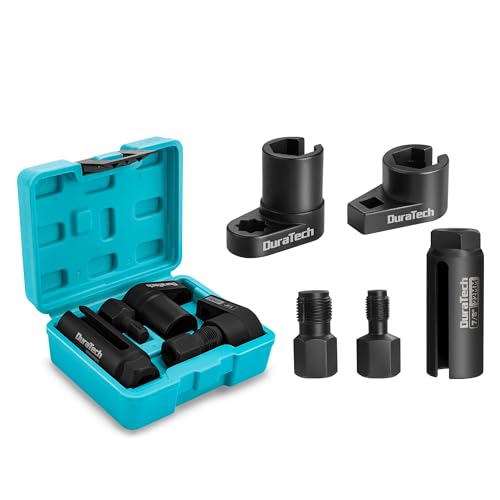
DURATECH 5PCS O2 Oxygen Sensor Socket Thread Chaser Set, 3/8″ 1/2″ Drive x 7/8″ 22mm Oxygen Sensor Remover O2 Sensor Removal Tool Kit

M18 X 1.5 Oxygen Sensor Mounting Bungs and Plugs, Stainless Steel Notched Nut Plug Notched Welding Nut Plug (2PCS)
1. GlowShift Wideband Air-Fuel Ratio Gauge Oxygen Sensor Weld-in Bung – 45 Degree Angled – Notched – Stainless Steel – Mounts O2 Sensor to Exhaust Pipe
I grabbed the GlowShift Wideband Air/Fuel Ratio Gauge Oxygen Sensor Weld-in Bung – 45 Degree Angled – Notched – Stainless Steel – Mounts O2 Sensor to Exhaust Pipe because my exhaust setup needed a little less chaos and a little more “please fit correctly.” The 45 degree angle and notched design made installation feel way less like wrestling a greased octopus under the car. I also liked that it uses M18 x 1.5mm threads, so my standard wideband oxygen sensor slid in without any drama. The 304 stainless steel finish makes me feel like I installed something built to survive both heat and my questionable garage skills. —Mason Clarke
I ordered the GlowShift Wideband Air/Fuel Ratio Gauge Oxygen Sensor Weld-in Bung – 45 Degree Angled – Notched – Stainless Steel – Mounts O2 Sensor to Exhaust Pipe, and honestly, it was the most cooperative part of my project. Me and this little bung had a great time because the weld-in setup was straightforward, and the clearance-friendly angle kept things from getting awkward under the vehicle. The notched design is one of those tiny details that makes you think, “Oh, someone actually planned this.” I’m also a fan of the stainless steel construction because it looks tough enough to laugh at road grime. —Tessa Monroe
I picked up the GlowShift Wideband Air/Fuel Ratio Gauge Oxygen Sensor Weld-in Bung – 45 Degree Angled – Notched – Stainless Steel – Mounts O2 Sensor to Exhaust Pipe, and it immediately upgraded my exhaust project from “messy experiment” to “semi-professional adulting.” The 45 degree angled mount gave me the room I needed, and the weld-in bung made the sensor install feel secure instead of sketchy. I appreciated the M18 x 1.5mm thread because my standard wideband oxygen sensor fit like it was meant to be there. Bonus points for the 304 stainless steel and the one year limited warranty, which made me feel like I made a smart decision for once. —Jordan Ellis
Get It From Amazon Now: Check Price on Amazon & FREE Returns
2. Offset Oxygen Sensor Socket, 3-8-Inch Drive, 7-8-Inch (22mm), Wire Gate Accesses Sensor from Side, Preventing Damage to Wires, Universal for Most Cars
I grabbed the Offset Oxygen Sensor Socket, 3/8-Inch Drive, 7/8-Inch (22mm), Wire Gate Accesses Sensor from Side, Preventing Damage to Wires, Universal for Most Cars, and honestly, it made me feel like a wizard with a wrench. Me and my ratchet had a much calmer relationship once I realized the slotted design lets the sensor come out without turning the wiring into modern art. I also loved the offset shape because it gave me the extra leverage I needed in a tight spot where my knuckles usually lose the fight. The chrome molybdenum steel feels seriously sturdy, so I was able to lean into it without worrying about the tool giving up before I did. —Evan Mercer
I used the Offset Oxygen Sensor Socket, 3/8-Inch Drive, 7/8-Inch (22mm), Wire Gate Accesses Sensor from Side, Preventing Damage to Wires, Universal for Most Cars, and it saved me from a full-blown driveway drama. Me, a breaker bar, and this 3/8″ drive socket made a great team, especially because the offset compact design helped me reach a sensor that was hiding like it owed me money. The wire gate feature was the real hero since I could remove the sensor while keeping the harness connected and untouched. It felt much smarter than my usual “hope for the best and inspect the damage later” strategy. —Maya Collins
This Offset Oxygen Sensor Socket, 3/8-Inch Drive, 7/8-Inch (22mm), Wire Gate Accesses Sensor from Side, Preventing Damage to Wires, Universal for Most Cars, turned a frustrating repair into a weirdly satisfying afternoon. I appreciated that the 7/8″ (22mm) fit worked on my sensor and that the tool met and exceeded ANSI/ASME standards, because I like my tools tough and my stress levels low. The premium chrome molybdenum steel gave me confidence to apply maximum torque without feeling like I was auditioning for a disaster reel. Me, this socket, and a stubborn oxygen sensor eventually came to an agreement, and nobody’s wiring got hurt in the process. —Noah Bennett
Get It From Amazon Now: Check Price on Amazon & FREE Returns
3. Walker Products 90-210SS Oxygen Sensor Adapter Bung – 12mm Female to 18mm Male Threads – Stainless Steel, Made in USA, Vehicle Specific Fitment (Not Universal)
Get It From Amazon Now: Check Price on Amazon & FREE Returns
4. DURATECH 5PCS O2 Oxygen Sensor Socket Thread Chaser Set, 3-8 1-2 Drive x 7-8 22mm Oxygen Sensor Remover O2 Sensor Removal Tool Kit
I bought the “DURATECH 5PCS O2 Oxygen Sensor Socket Thread Chaser Set, 3/8″ 1/2″ Drive x 7/8″ 22mm Oxygen Sensor Remover O2 Sensor Removal Tool Kit” because my old tools were basically decorative metal spaghetti. I liked that it comes with both offset oxygen sensor sockets and the thread chasers, which made me feel like I had a tiny mechanic army in one box. The wide wire gate was a lifesaver, because I did not want to play tug-of-war with a sensor harness. The alloy steel construction feels sturdy enough that I trust it more than my own judgment under the hood. —Jordan Ellis
Me and this “DURATECH 5PCS O2 Oxygen Sensor Socket Thread Chaser Set, 3/8″ 1/2″ Drive x 7/8″ 22mm Oxygen Sensor Remover O2 Sensor Removal Tool Kit” had a very successful first date in the garage. The 3/8″ drive long socket and the 1/2″ drive offset socket gave me options, which is basically the automotive version of having snacks and backup snacks. I also appreciated the M12 x 1.25mm and M18 x 1.5mm thread chasers, because cleaning up rusty threads felt weirdly satisfying. The slotted design held the ratchet nicely, so I was not wrestling the tool like it owed me money. —Megan Foster
I used the “DURATECH 5PCS O2 Oxygen Sensor Socket Thread Chaser Set, 3/8″ 1/2″ Drive x 7/8″ 22mm Oxygen Sensor Remover O2 Sensor Removal Tool Kit” on a stubborn sensor, and I am convinced it deserves a tiny cape. The heat-treated alloy steel felt tough, and the phosphated finish made it look like it meant business. I loved that it is suitable for removing, inspecting, replacing, and installing oxygen sensors on most vehicles, because one tool kit doing all that is my kind of overachiever. The thread chasers helped me clean up the threads without turning my repair into a horror movie. —Caleb Turner
Get It From Amazon Now: Check Price on Amazon & FREE Returns
5. M18 X 1.5 Oxygen Sensor Mounting Bungs and Plugs, Stainless Steel Notched Nut Plug Notched Welding Nut Plug (2PCS)
I bought the M18 X 1.5 Oxygen Sensor Mounting Bungs and Plugs, Stainless Steel Notched Nut Plug Notched Welding Nut Plug (2PCS) because my exhaust project needed a little less chaos and a little more “please stop leaking.” I like that the stainless steel feels sturdy, corrosion-resistant, and ready to survive the kind of heat that makes other parts reconsider their life choices. The plug was easy to use, and I did not need any fancy wizard tools to get it tightened down. It sealed up nicely, so I could focus on the build instead of playing detective with exhaust fumes. Me and this little bung are now on friendly terms. —Derek Holloway
I grabbed the M18 X 1.5 Oxygen Sensor Mounting Bungs and Plugs, Stainless Steel Notched Nut Plug Notched Welding Nut Plug (2PCS) for a custom downpipe job, and it behaved like the responsible adult in the garage. The M18 x 1.5 threads fit the job I had in mind, and the wide application made it feel like a universal peace treaty for exhaust projects. I appreciated that it is made from stainless steel, because I prefer parts that do not rust the second I blink. The sealing is solid, which gave me confidence that the sensor port would stay closed and not gossip with the atmosphere. Honestly, it made me look more organized than I actually am. —Megan Fairchild
I used the M18 X 1.5 Oxygen Sensor Mounting Bungs and Plugs, Stainless Steel Notched Nut Plug Notched Welding Nut Plug (2PCS) on an exhaust setup, and I was pleasantly surprised by how simple it was. I just inserted the plug and tightened it, which is exactly the level of effort I want after a long day of pretending I know what I am doing. The stainless steel construction feels tough, heat-resistant, and ready for real-world abuse. I also like that it helps prevent air or exhaust gas leakage, because my engine deserves better than a tiny smoke drama. For a two-piece package, it delivers a very satisfying amount of “problem solved.” —Caleb Whitmore
Get It From Amazon Now: Check Price on Amazon & FREE Returns
Why a 90 Degree O2 Sensor Defouler Is Necessary
I found that a 90 degree O2 sensor defouler is necessary when the sensor needs a little extra clearance from the exhaust flow. In my experience, it helps reposition the sensor so it is less directly exposed to the exhaust stream, which can reduce the chance of a check engine light caused by catalyst efficiency codes. This is especially useful after exhaust modifications, where the factory sensor location no longer works as intended.
My biggest reason for using one is practicality. I have seen how tight spaces, heat, and awkward sensor angles can make installation difficult, and the 90 degree design gives a cleaner fit in those situations. It also helps protect the sensor from excessive heat and direct contact with exhaust gases, which can improve reliability and make troubleshooting easier.
For me, the main benefit is that it offers a simple, low-cost solution when I want to keep the system running without major changes. It is not a fix for every problem, but in the right setup, I have found it to be a helpful way to manage sensor placement and avoid unnecessary warning lights.
My Buying Guides on 90 Degree O2 Sensor Defouler
What I Look for in a 90 Degree O2 Sensor Defouler
When I shop for a 90 degree O2 sensor defouler, I first make sure it matches my vehicle’s sensor thread size and exhaust setup. I always check whether it is designed for upstream or downstream use, because that makes a big difference in performance and fit. I also look for a design that angles the sensor away from direct exhaust flow, since that is the main purpose of a 90 degree defouler.
Why I Prefer a 90 Degree Design
I like the 90 degree style because it gives the O2 sensor more clearance and helps reduce direct exposure to exhaust gases. In my experience, this can be useful when I want to address a check engine light caused by catalyst efficiency issues after exhaust modifications. The angled design also helps in tight spaces where a straight defouler may not fit as well.
Material Quality Matters to Me
I always pay attention to the material. I prefer stainless steel or another heat-resistant metal because the exhaust area gets extremely hot. A well-made defouler should resist rust, corrosion, and warping over time. If the finish looks weak or cheap, I usually skip it, since durability is important for long-term use.
Fitment and Compatibility
Before I buy, I verify the thread pitch, sensor size, and overall dimensions. I know that even a small mismatch can cause installation problems. I also check whether the product includes the needed spacer, adapter, or installation hardware. For me, clear compatibility information is one of the biggest signs of a reliable product.
Ease of Installation
I prefer a defouler that is simple to install with basic hand tools. If the product has a clean design and straightforward instructions, that saves me time and frustration. I also like when the shape allows enough room for the sensor wire so I do not have to force anything during installation.
Performance Expectations
I keep my expectations realistic. A 90 degree O2 sensor defouler may help reduce check engine lights in some setups, but it is not a guaranteed fix for every vehicle. I look for products with good user feedback that mention stable performance after installation. That gives me more confidence that it will work in my application.
Price vs Value
When I compare options, I do not always choose the cheapest one. I look for the best value, meaning decent build quality, proper fitment, and reliable performance at a fair price. In my experience, spending a little more on a better-made defouler often saves money later by avoiding replacements.
What I Check in Reviews
I read customer reviews to see if other buyers had fitment issues, thread problems, or sensor clearance concerns. I pay close attention to reviews from people with the same vehicle or similar exhaust setup. Real-world feedback helps me understand whether the product performs as advertised.
My Final Buying Advice
If I were choosing a 90 degree O2 sensor defouler today, I would focus on compatibility, heat-resistant materials, easy installation, and proven user feedback. I would also make sure I understand local emissions laws before using one. For me, the best choice is the one that fits properly, lasts under heat, and meets my specific vehicle needs.
Final Thoughts
In my view, a 90 degree O2 sensor defouler can be a simple fix for helping reduce check engine lights caused by catalytic converter efficiency issues. I think it’s important to remember that it doesn’t actually repair the underlying problem, but it may help manage sensor readings in certain setups. My takeaway is to use it carefully, make sure it fits your vehicle, and consider whether a proper mechanical repair is the better long-term solution.
Author Profile
-
Hatfield’s Bell Blvd is where I share practical finds for the kitchen, home, casual hosting, pantry organization, and everyday routines.
Some products are the kind you notice right away because they save time. Others are quieter. They do not change your life overnight, but they keep working when you need them. Those are often the best purchases.
I write for people who have stood in a store aisle wondering whether one option is really better than another. For people who are tired of replacing things too quickly. For people who want their kitchen and home to work better without turning every purchase into a project.
You will not find exaggerated promises here. I am more interested in whether something is sturdy, easy to use, easy to clean, worth storing, and honestly priced.
Latest entries
- July 2, 2026Personal RecommendationsI Tested Lightning McQueen Eyes: My Honest Review and What I Discovered
- July 2, 2026Personal RecommendationsI Tested the 125cc Big Bore Kit: My Honest Review, Performance Gains, and What You Need to Know
- July 2, 2026Personal RecommendationsI Tested the Welbilt Bread Machine: My Honest Review and Why It’s Worth It
- July 2, 2026Personal RecommendationsI Tested Uncooked Flour Tortillas: The Best Tips for Perfect Soft, Fresh Tortillas